Limbo: Keeping Post-Grad Friendships Active Through Asynchronous Micro-Interactions
Taking a daily prompt social space from 0-to-1 on the iOS App Store—validated through needfinding, competitive audits, interactive prompt ranking, and a live campus launch.
Project Overview
- Role
- Sole UX Researcher
- Team
- 3 People (1 UXR, Product Design, React Native Engineering)
- Timeline
- 22 Weeks (Jan – Jun 2026) | Capstone Project
- Platform
- Live on the iOS App Store
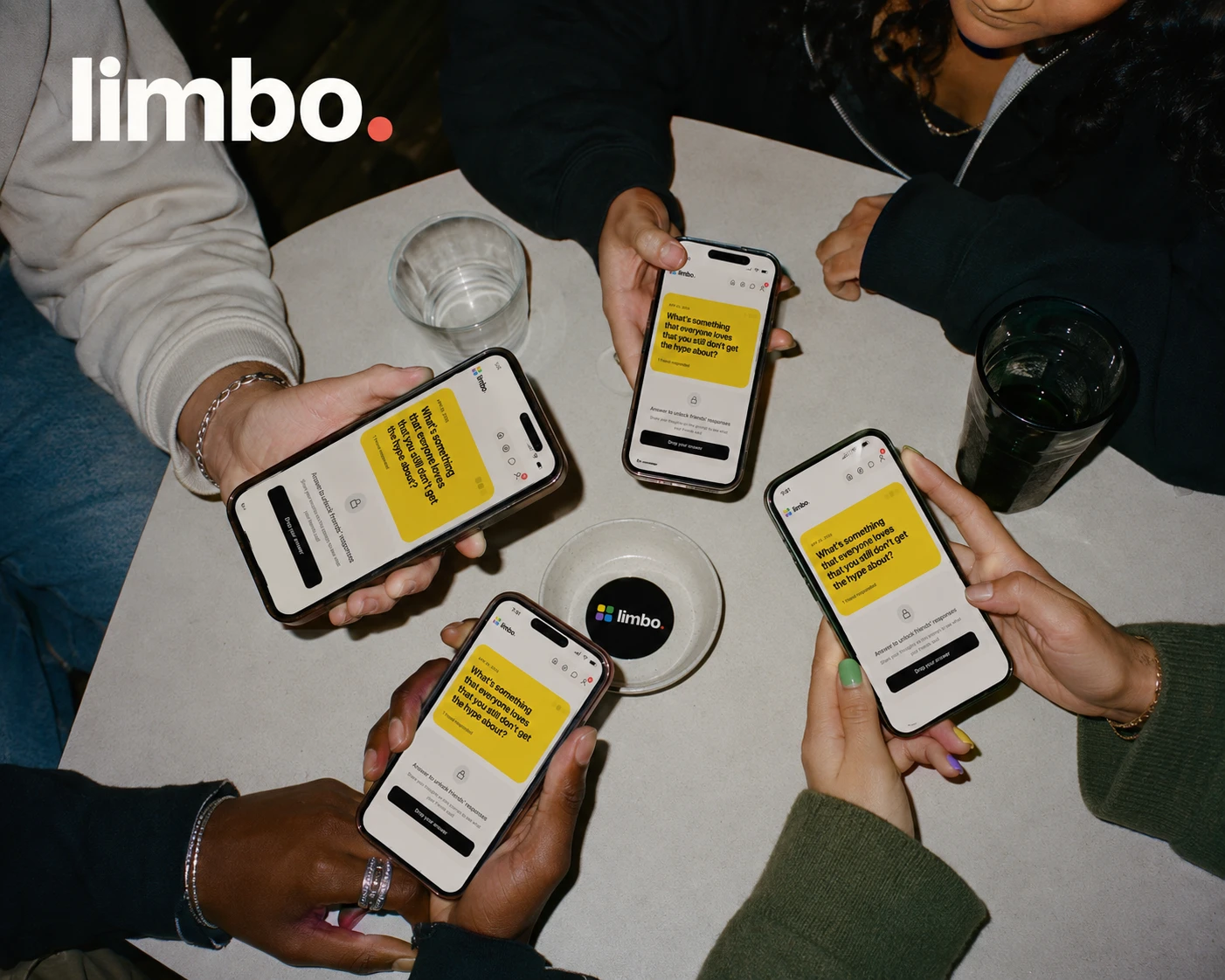
Overview
When young adults graduate college and scatter across cities, they lose the forced proximity that naturally sustains relationships. Staying in touch often degrades into awkward, high-effort catch-up calls or silent social media scrolling.
Limbo was created as a low-friction protocol for post-grad friendships. Designed to support both 1-on-1 friendships and close-knit groups, Limbo delivers daily, low-stakes prompts (text, drawings, photo proofs, and opinion debates) that grant friends social permission to interact effortlessly without needing a major life update to reach out.
My Role & Key Impact
End-to-End Research Ownership
Served as sole researcher across a 4-stage pipeline: needfinding interviews (n = 11 team total; n = 2 deep-dive 90-min sessions led individually), a Private Spaces in Public Media survey (n = 23), a Claude-powered prompt preference test (n = 18 + follow-up interviews), and 7-day beta testing diary waves.
Product Mechanics Strategy
Balanced 1-on-1 and group utility—designing Direct Message replies for intimacy, locked prompt mechanics to drive low-effort engagement, and multi-modal input styles (Draw Mode, Scrapbook grid).
Generative Branding & Guerrilla GTM
Led the research-backed launch campaign—using generative AI to create a gritty, high-contrast brand mood board, placing 24 provocative prompt posters across graduate housing, and activating campus touchpoints.
Special Thanks: Grateful to my founding teammates and project coaches who collaborated on bringing Limbo from raw concept to a live App Store product.
01 — Problem & Audit
The Post-Grad Friendship Gap & Competitive Audit
Through foundational interviews with recent grads (Stanford, SDSU), we mapped the core barriers to post-grad social connection: high activation energy, lack of shared daily context, and fear of being overbearing.
Competitive Analysis: Daily Check-In Mechanics
To understand how existing platforms attempt daily engagement, I conducted a competitive audit of platforms like BeReal and Candle:
The Flaw in Existing Models
Daily notification mechanics often devolve into broadcast performance or obligation.
The Private Space Opportunity
Survey synthesis showed that while public feeds (Instagram) feel performative ("milestones"), intimate connections thrive in private, lower-exposure spaces (Close Friends, Finstas) where users can share unpolished, everyday moments.
Landscape scan · daily cadence vs. private intimacy
Daily-posting cadence
Apps built on a once-a-day ritual to post.
Prompt- & privacy-based intimacy
Where people already share unpolished, close-circle moments.
The open space
No incumbent combined a daily prompted ritual with a genuinely private, low-exposure circle. Broadcast apps push performance; private spaces lack a reason to show up each day. Limbo sits in the gap: a prompted daily reason to reach out, held inside a small trusted circle.
02 — Research Pipeline
Mixed-Methods Strategy & Execution
I designed an iterative research pipeline matching methodology to each stage of product maturity:
Needfinding Interviews (n = 11 Total Team; n = 2 Individual 90-Min Deep Dives)
Conducted extensive 90-minute qualitative interviews with recent Stanford and SDSU grads to map emotional friction, loss of proximity, and communication decay after college.
Private Spaces in Public Media Survey (n = 23)
Distributed across Reddit and community mailing lists to analyze how young adults construct digital intimacy and differentiate public broadcasts from private friend circles.
Interactive Preference Sorter & Interviews (n = 18)
Research Engineering: Built a custom interactive prompt sorter in Claude to run head-to-head preference rankings across 4 prompt categories (Hypotheticals, Opinions, Personal, and Debates), pairing each test with a 1-on-1 qualitative interview.
7-Day Beta Diary Waves
Deployed early App Store builds to test daily response behavior, track prompt skip rates, and gather daily diary feedback.
Four stages · methodology matched to product maturity
Needfinding Interviews
n = 11 · 2 deep dives90-min qualitative sessions mapping post-grad friction.
Private Spaces Survey
n = 23How young adults construct digital intimacy.
Preference Sorter
n = 18 + interviewsClaude-built head-to-head prompt ranking.
Beta Diary Waves
7-day buildsLive response behavior and skip rates.
03 — Insights & Mechanics
Finding 1: Designing for Intimacy vs. Designing for Play
What I Found: Research revealed a clear divide in user expectations—one-on-one interactions required high intimacy, while group settings required playfulness and low pressure.
What We Built:
- Private Comments as Direct Messages: Commenting on a friend's prompt answer opens a private 1-on-1 DM rather than a public thread, fostering direct conversation.
- Playful Input Modes: Added a Drawing Canvas, binary debate sliders, and group game modes to keep group interactions light.
Qualitative synthesis · “what's the mental imagery when users answer a prompt?”
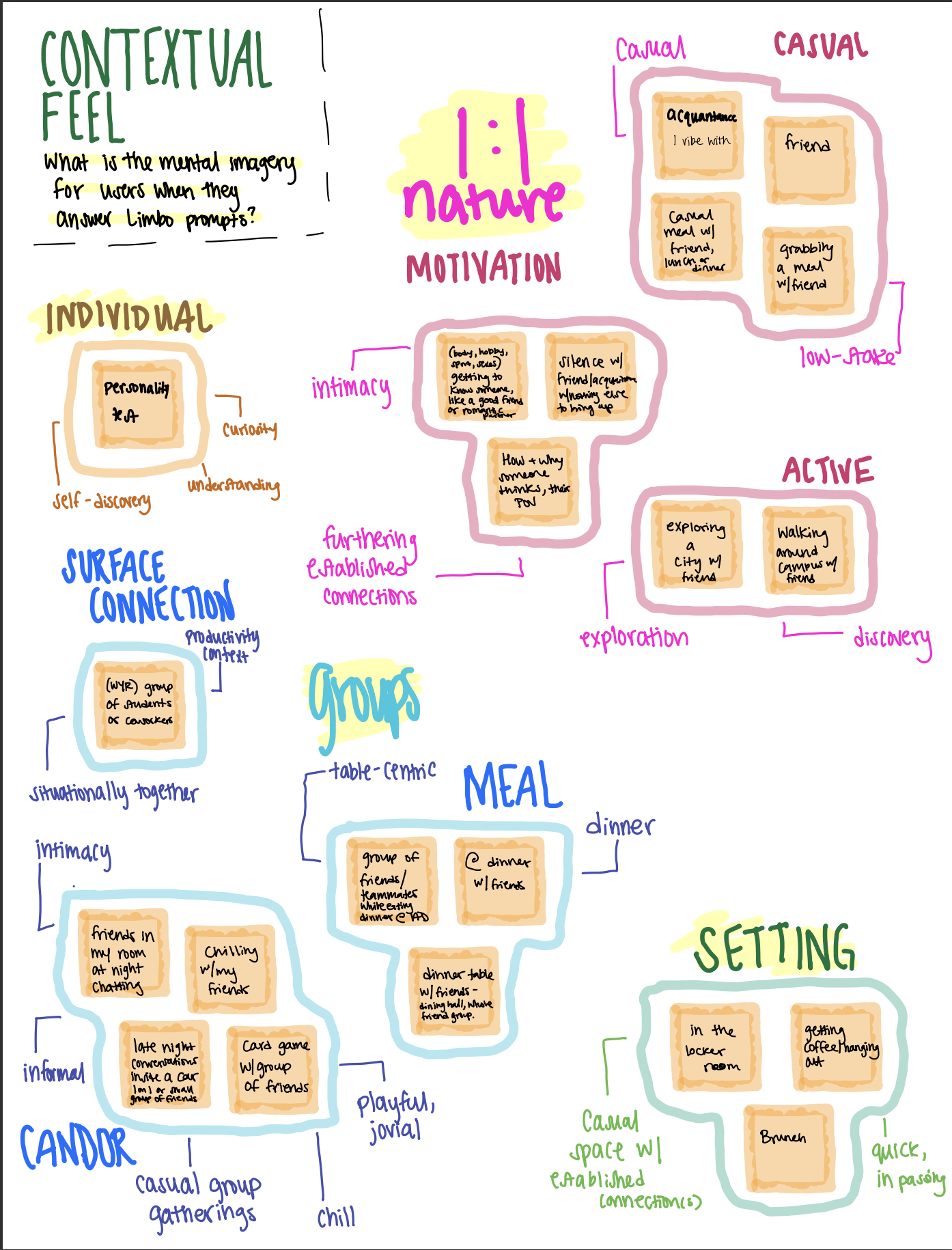
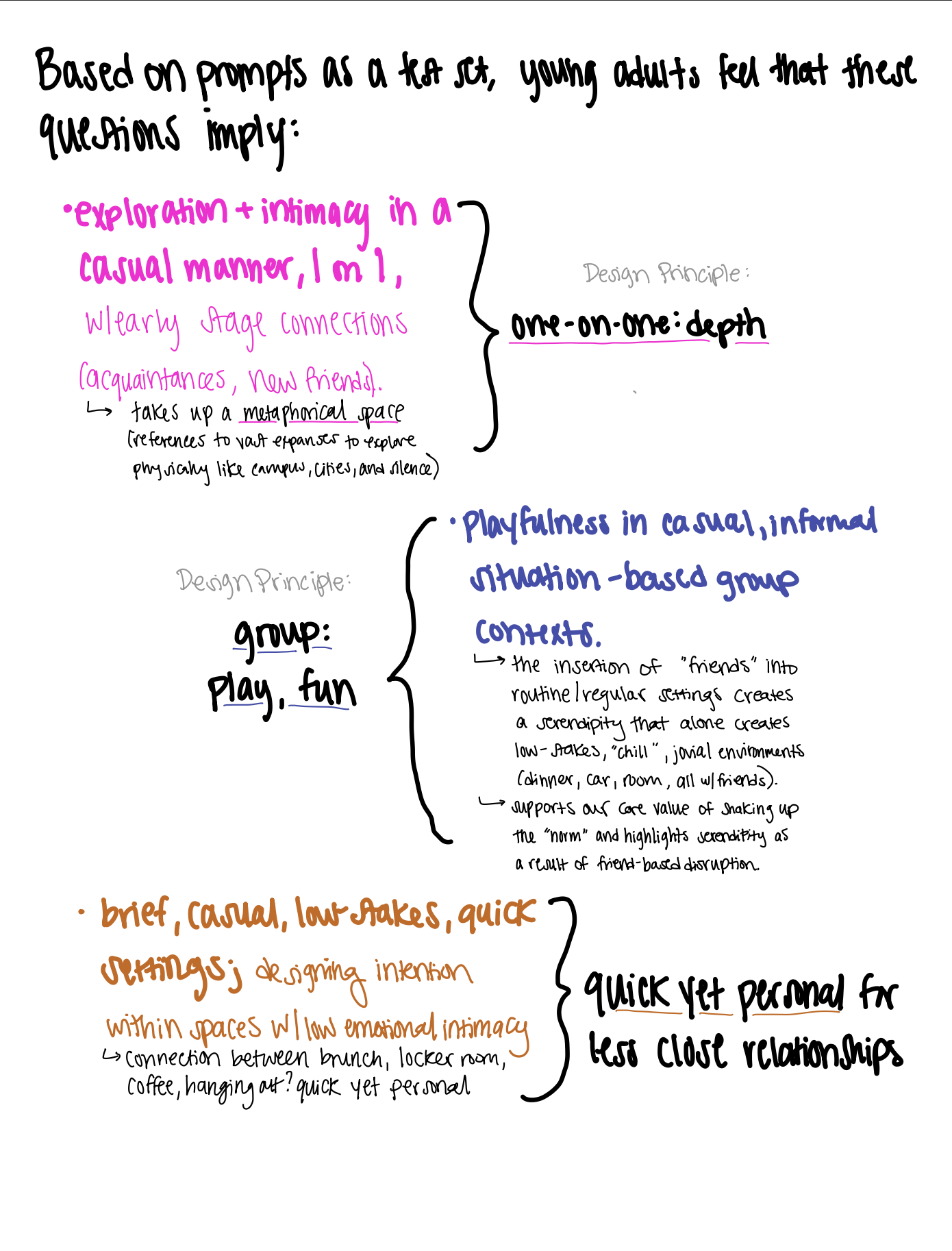
My hand synthesis of how users pictured answering prompts resolved into three design principles — 1-on-1 = depth, group = play, and quick-yet-personal for looser ties — which drove the intimacy-vs-play split above.
Finding 2: Prompt Taxonomy & Overcoming the "Icebreaker" Stigma
What I Found: In the preference ranking study, Personal and Opinion prompts ranked significantly higher than generic icebreakers. Participants noted that generic "conversation starters" felt clinical and awkward when used with existing friends.
What We Built: Curated a master prompt taxonomy focusing on creative, surprising angles (e.g., "What's your most unfair ick?" or "If you woke up in someone else's body, how would you convince your loved ones?") rather than basic interview questions.
Prompt favorability ranking · avg score out of 12 · n = 10 participants
Where they pictured asking these
Wording sensitivity
How they described the set
In-person vs. on an app
Finding 3: Solving the Cold-Start Problem with Lock Mechanics & Profile Scrapbooks
What I Found: Beta testing showed that when users logged in and saw an empty feed, engagement stalled. Seeing friends' answers was the primary motivation to open the app.
What We Built:
- Lock Mechanism: Users must post their own daily response to unlock and view their friends' answers for that day.
- Profile Scrapbooks: Created a personal archive grid of past prompt answers and pinned memories, giving users content to explore even when friends were inactive.
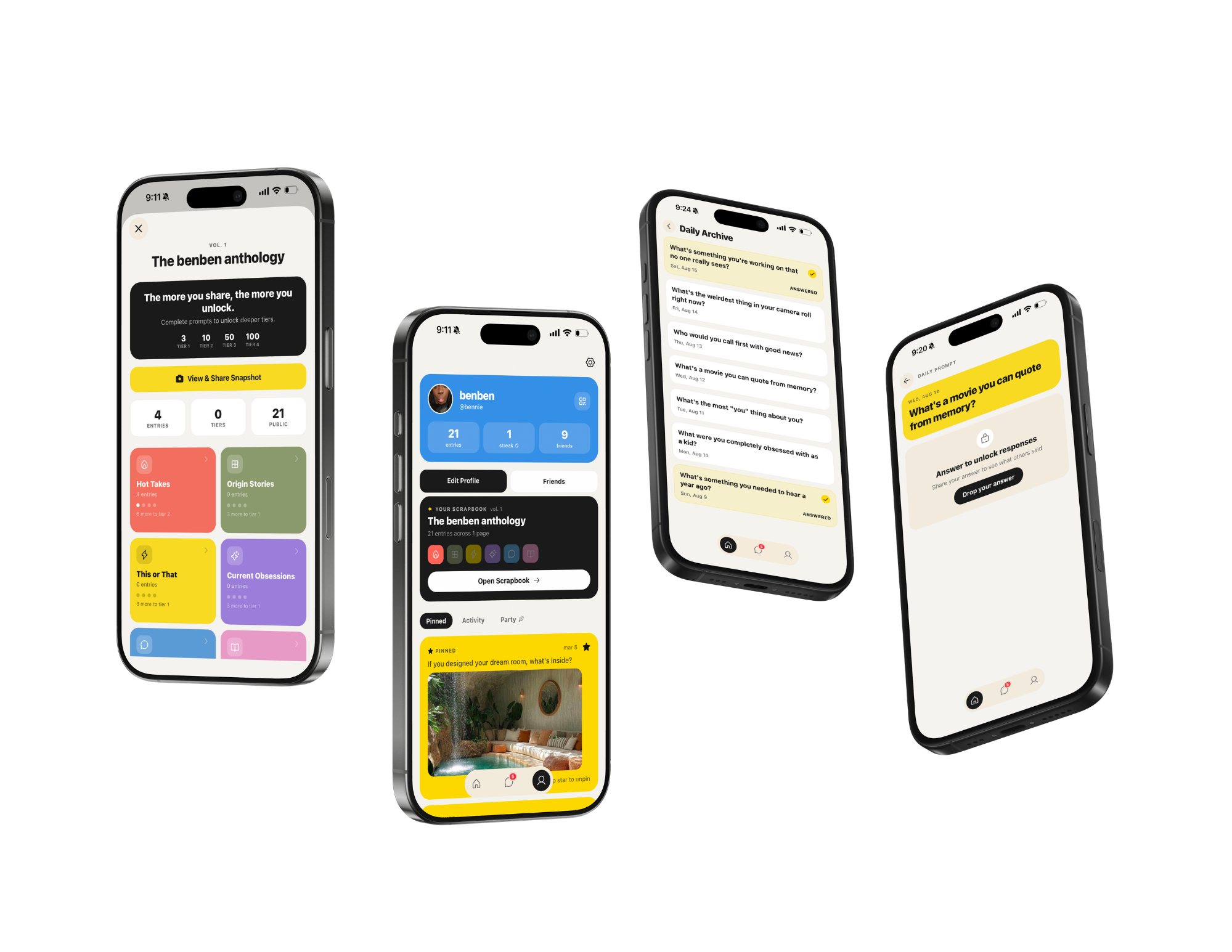
Prompt pool · 30 prompts across 3 tiers
The First 30 Prompts
From the bias-sort concept testing, I built the launch pool as three tiers, each testing a different assumption — how edgy was too edgy, how personal was too personal, and when a low-effort answer stopped being engaging. Even single words mattered:
Without
“What are you still scared of?”
Feels heavy. People expect a big vulnerable answer. Ranked lower overall.
With “lowkey” · ranked #3 overall
“What are you lowkey still scared of?”
People sit with it longer. Surfaces subconscious fears without raising the stakes.
T1Low floor, high ceiling
Easy to answer with potential for surprise — designed to ease people onto the platform with minimal friction.
Personal
Random hobby you've always wanted to try?
Hypothetical
Woke up in someone else's body — how do you prove it's you?
Hypothetical
25 hours in a day — what do you do with the extra hour?
Debate
Is a hot dog more of a taco or a sandwich?
Hypothetical
What are you doing in the alternate timeline closest to this one?
T2Push the envelope
Taboo, targeted, edgy — tests how users respond to higher social stakes and whether platform context suppresses honesty.
Taboo
Who's your least favorite person?
Personal
Fastest way you've ever lost someone's trust?
Personal
Share a Notes app deep cut.
Targeted
Pick a friend — give them $1K. What's the first thing they'd do?
Personal
What have you normalized that probably isn't normal?
T3Go deeper
Most personal — tests whether vulnerability increases with platform familiarity and trust built over time.
Personal
What are you lowkey still scared of?
Personal
What would you forgive that you'd never admit out loud?
Personal
Who gave you the best advice you've ever received?
Personal
What's something about you people don't ask about enough?
Personal
What small thing in a conversation do you always notice?
04 — Go-To-Market & Launch
Research-Backed Campus Takeover & Generative Brand Strategy
To transition Limbo from a digital prototype into a real-world social movement, I translated research principles directly into our Go-To-Market (GTM) strategy:
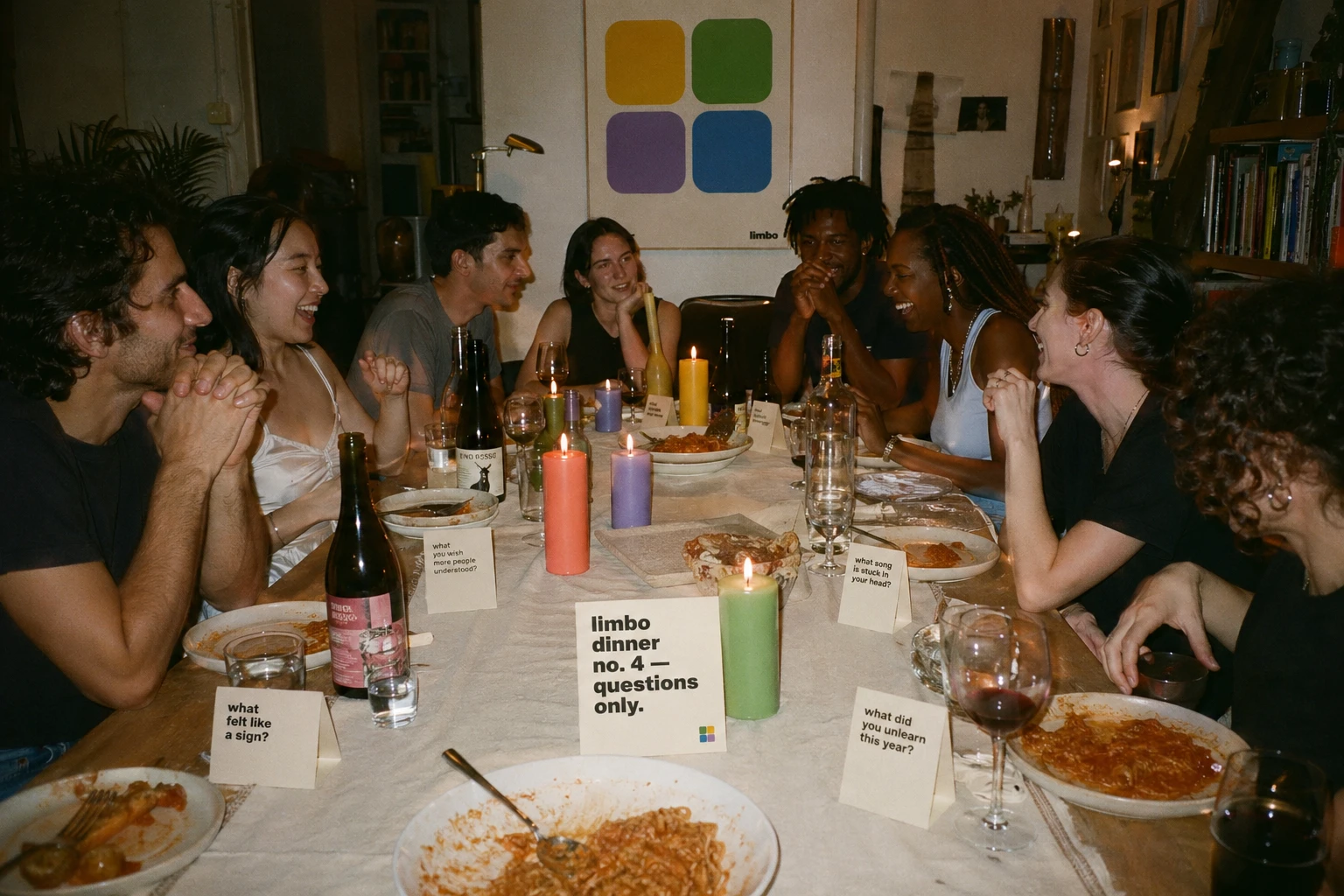
AI Generative Brand Exploration
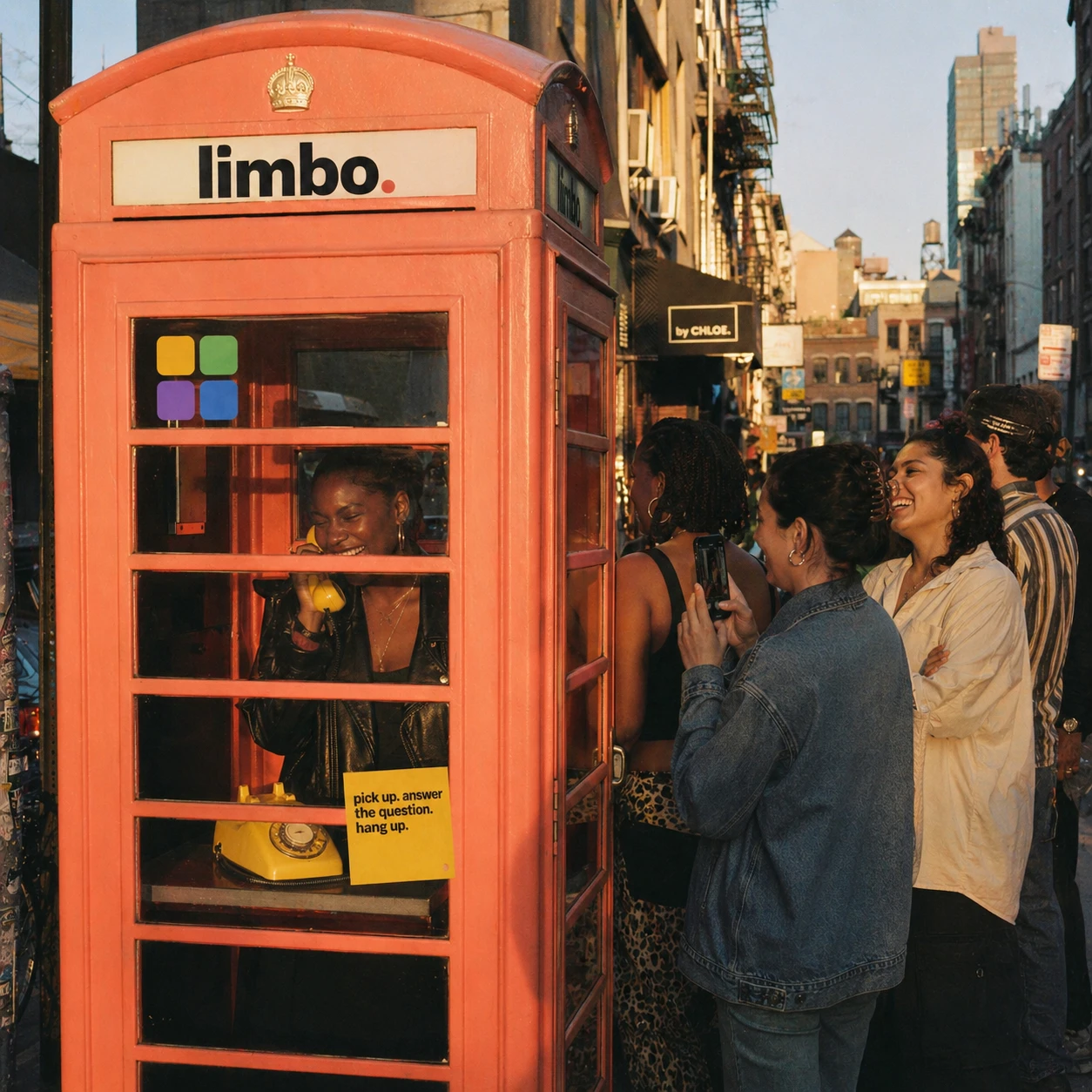
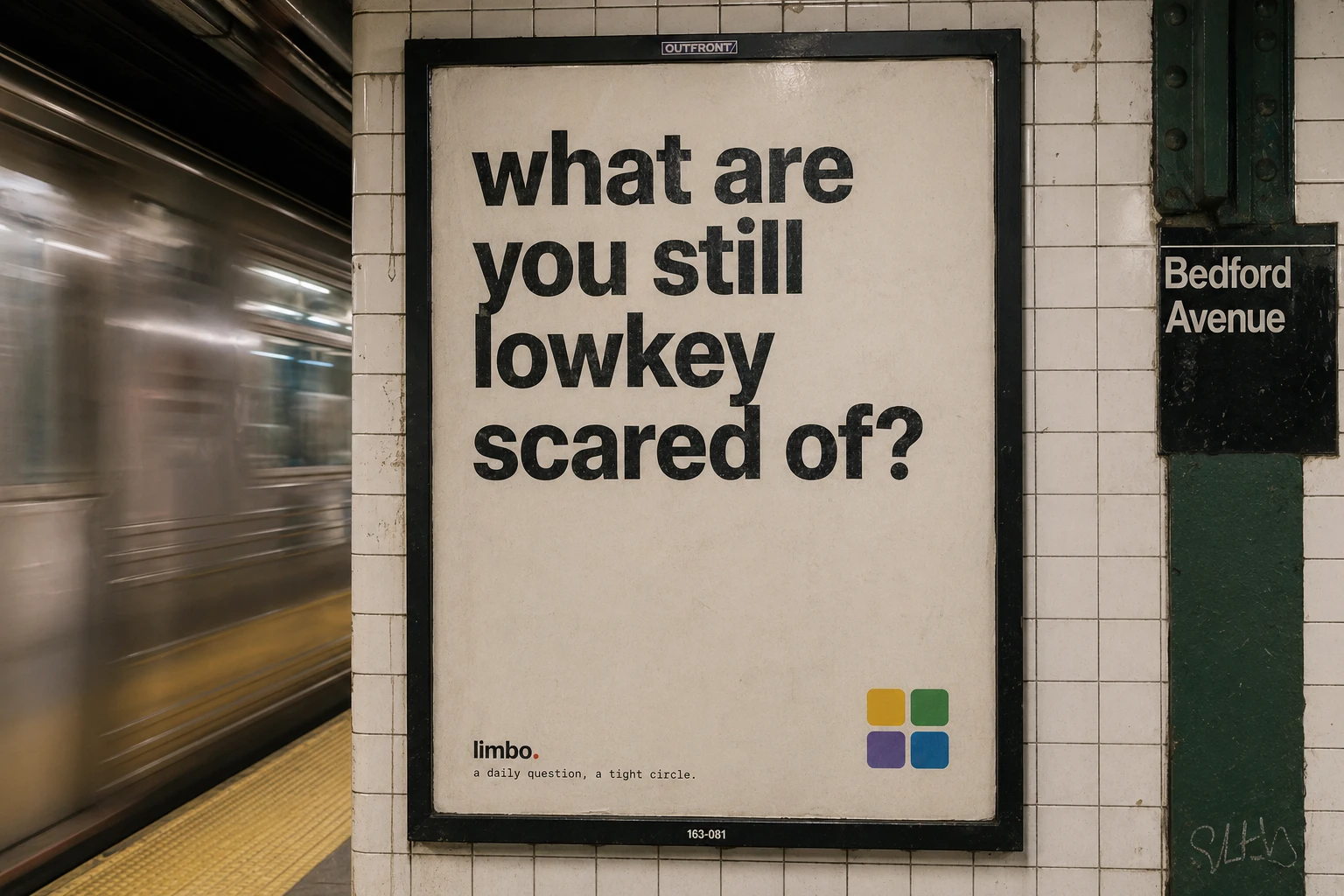
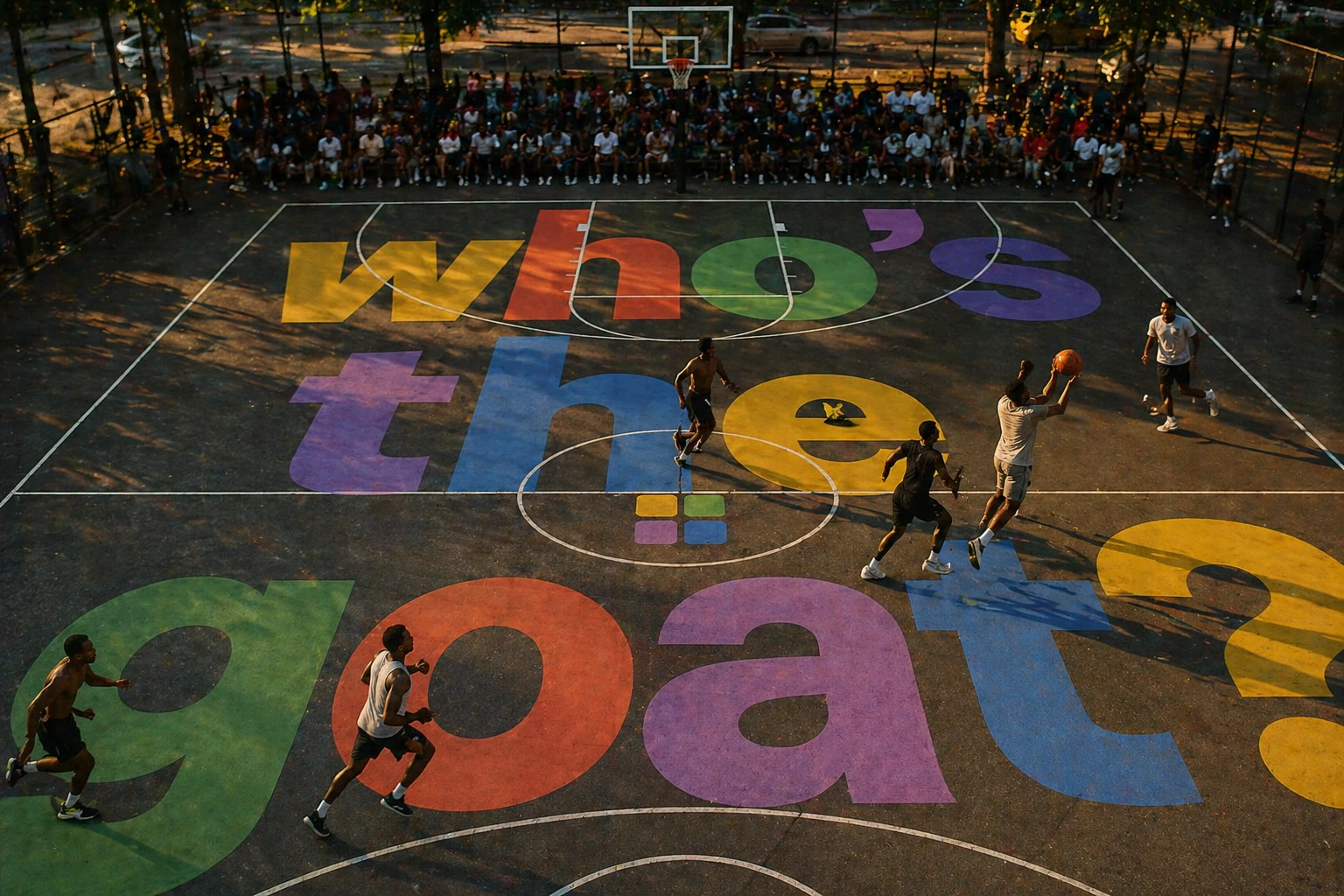
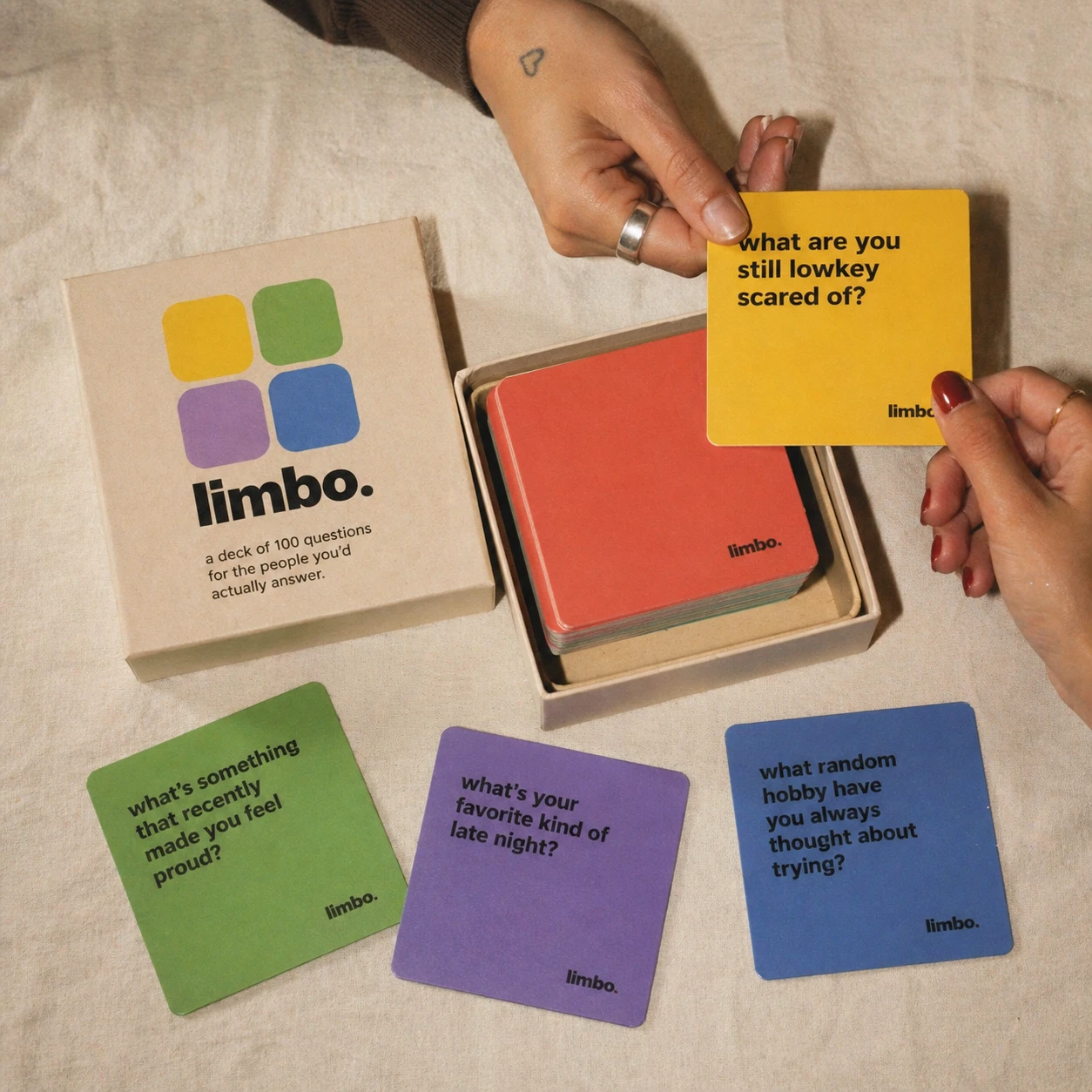
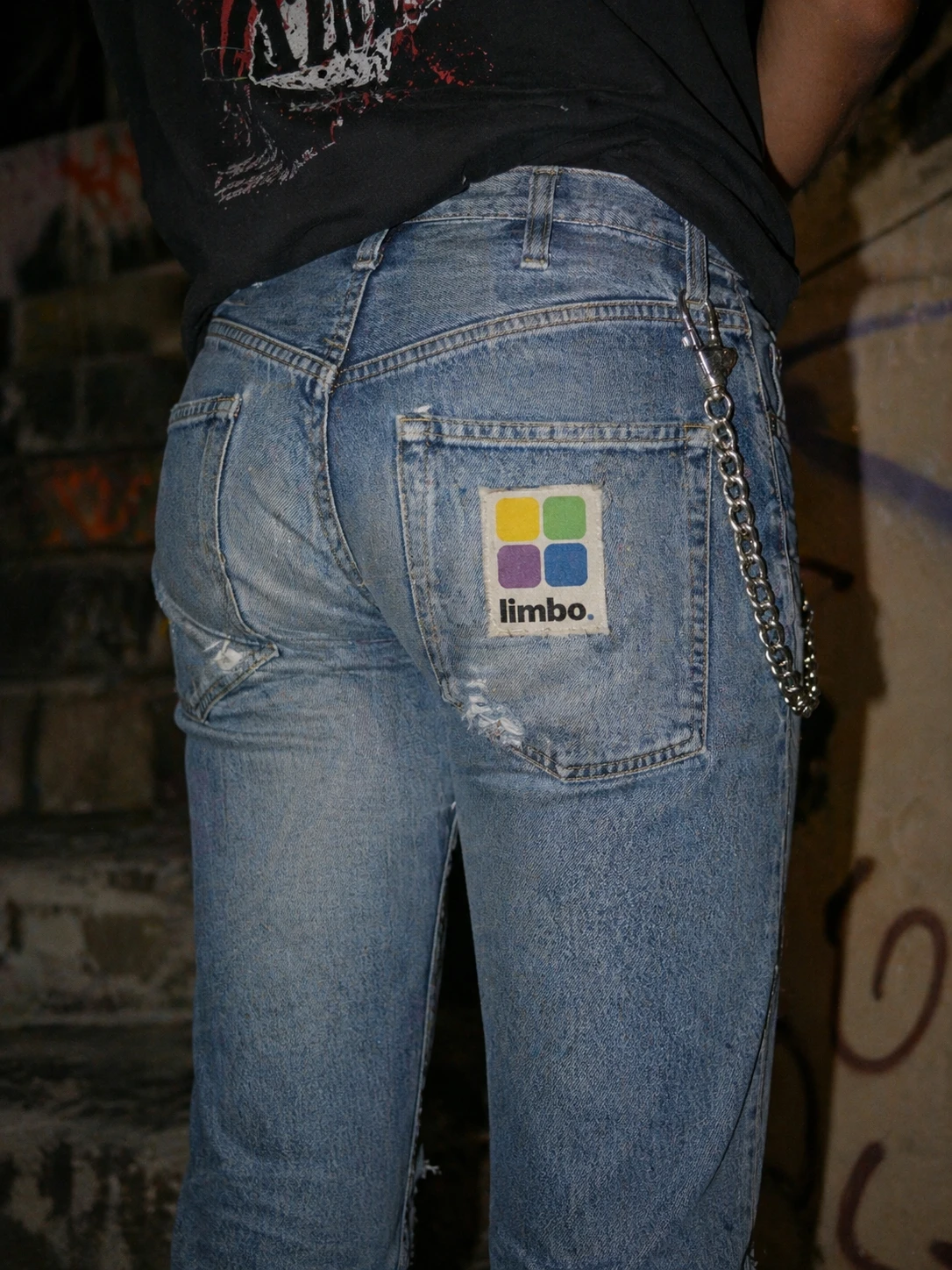
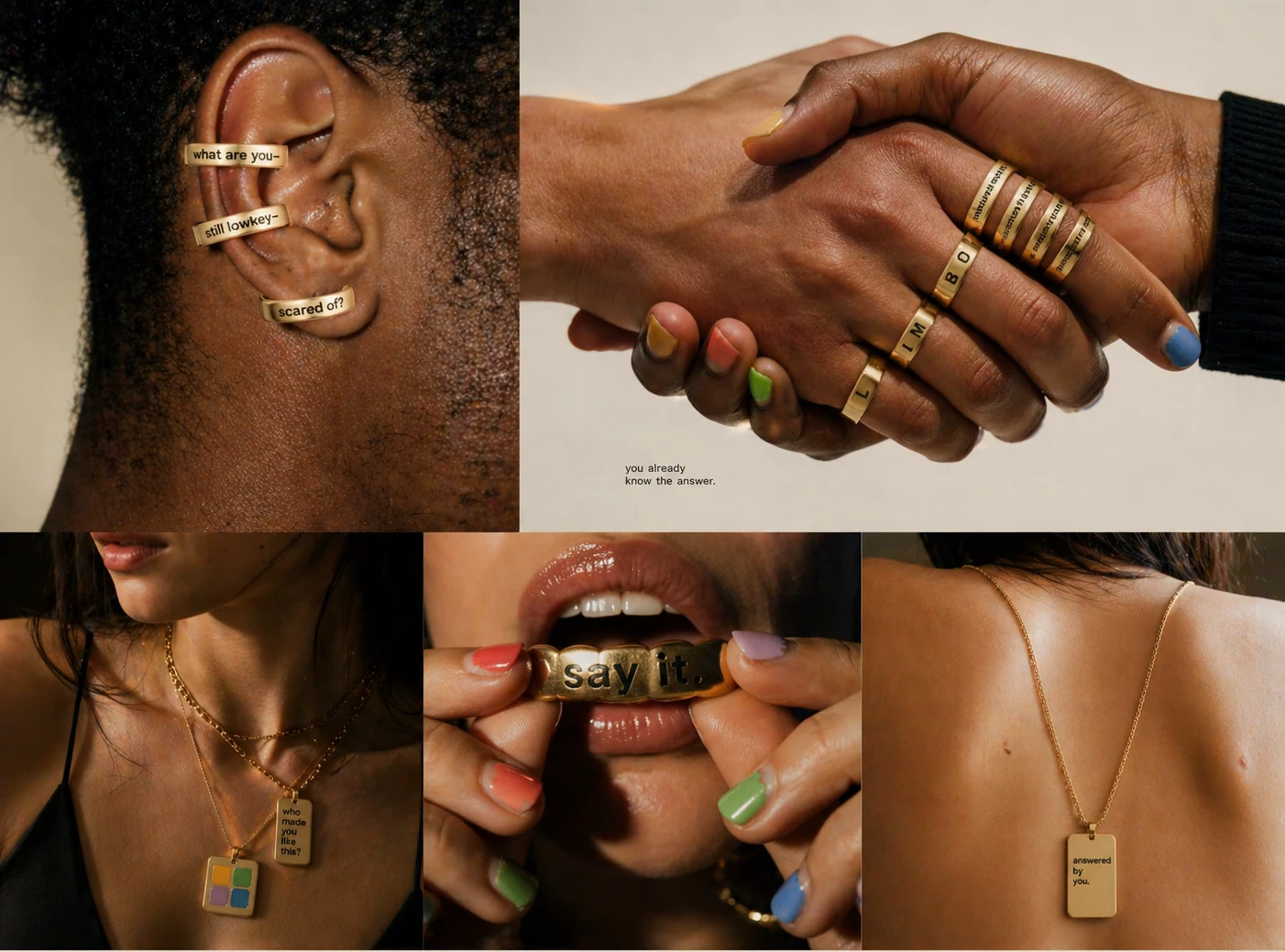
Used AI image generation tools to prototype a bold, raw, and high-energy visual identity—building mood collages for subway ads, apparel patches, and pop-up experience concepts.
Targeted Campus Poster Takeover
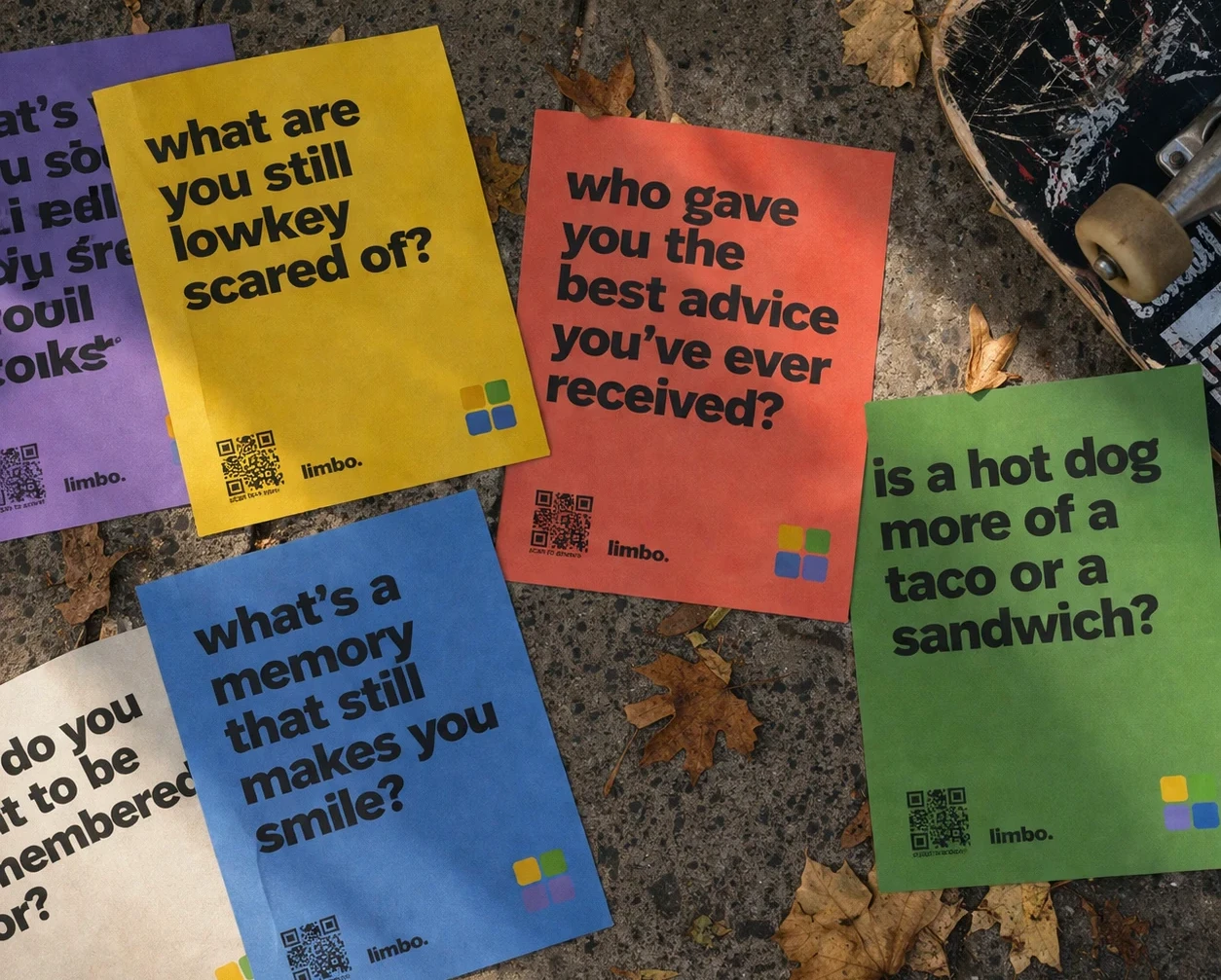
Selected 24 top-performing research prompts and printed them on bright, high-contrast paper. Posted them overnight across high-friction transition locations—graduate residences, all-gender restrooms, library stacks, and student unions.
Interactive QR Entry
Each poster featured a QR code allowing students to answer the prompt instantly and view live campus responses without download friction.
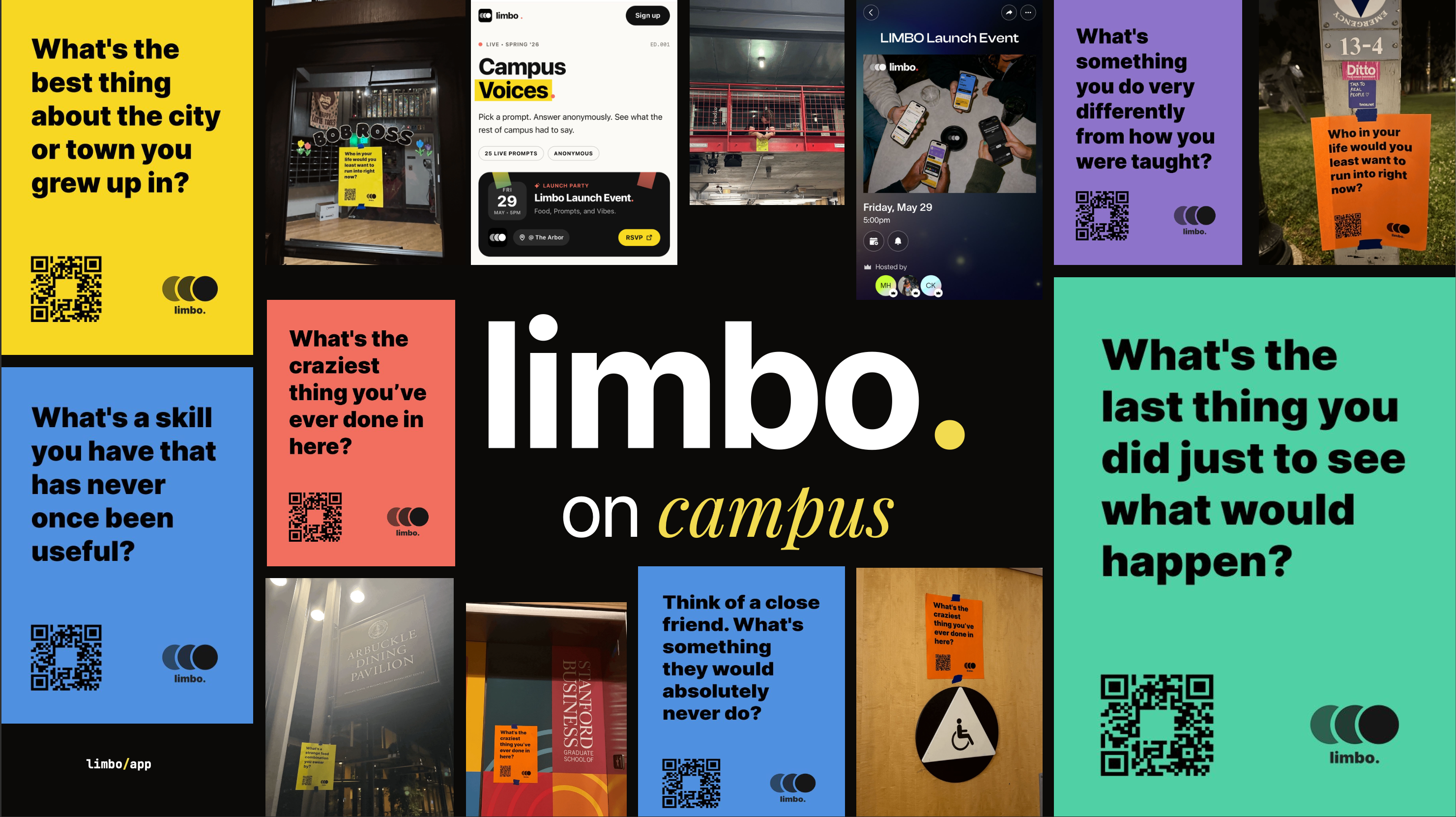
Generative brand world · AI-visualized in real-world contexts

Reflection & Limitations
Key Takeaways
0-to-1 Systems Thinking
Building a successful social product requires evaluating the full ecosystem—combining behavioral research, UI mechanics, brand atmosphere, and real-world onboarding tactics.
Value of Proactive Research Engineering
Building custom tools (like the Claude prompt sorter) allows researchers to gather quantitative preference data quickly without waiting for full engineering builds.
Study Limitations
Unmeasured Long-Term Retention
While cohort onboarding succeeded during launch, tracking 30-day longitudinal retention was constrained by the 22-week capstone timeline.
Early Needfinding Constraints
Initial deep-dive qualitative interviews relied on a small sample (n = 2 led individually out of n = 11 team total), requiring heavy validation through broader survey distribution (n = 23) and beta feedback.