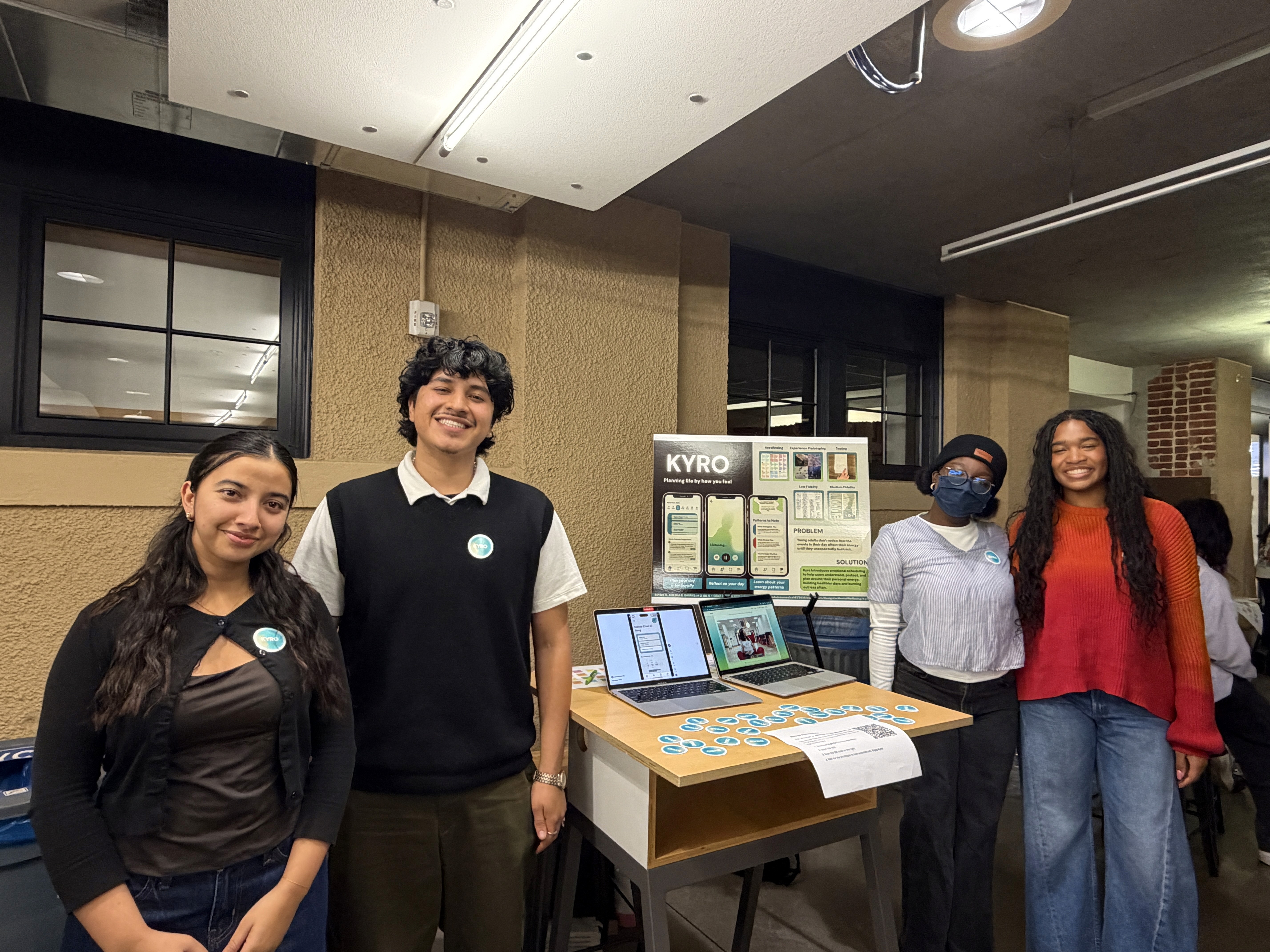
Kyro: Planning life by how it feels
preventing burnout through emotion-based scheduling
Role
Lead User Researcher, Designer
Timeline
10 Weeks | Oct 2025 - Dec 2025
Team
2 Designers, 2 Developers
THE PROBLEM
People don't recognize emotional breakdown until they're burnt out.
By the time most people realize their schedule has been draining them, the damage is done.
Research found that the primary users of online calendars are the same group as those currently most susceptible to burnout: people ages 25-44. Productivity tools help manage tasks, not emotions. Young adults experience burnout despite keeping up with to-do lists; their time gets managed, but their energy doesn't.
USER RESEARCH
9 interviews revealed how structure regulates identity.
9
In-depth interviews about views on productivity
15 - 59
Age Range
5
Key findings
2
Languages in which interviews were conducted
We interviewed students, young professionals, and working parents across Town & Country and Palo Alto to understand how people experience emotional breakdown in relation to their schedules.
Finding #1: Productivity is emotionally charged.
People don't just track time—they judge themselves by it. "Wasted time" reflects deeper feelings about self-worth and identity.
Finding #2: Structure regulates mood and identity.
People use calendars as psychological safety nets. Structure isn't just for time management—it's emotional regulation.
Finding #3: Ambient accountability shapes behavior.
Knowing someone else expects you somewhere creates motivation that self-imposed deadlines can't match.


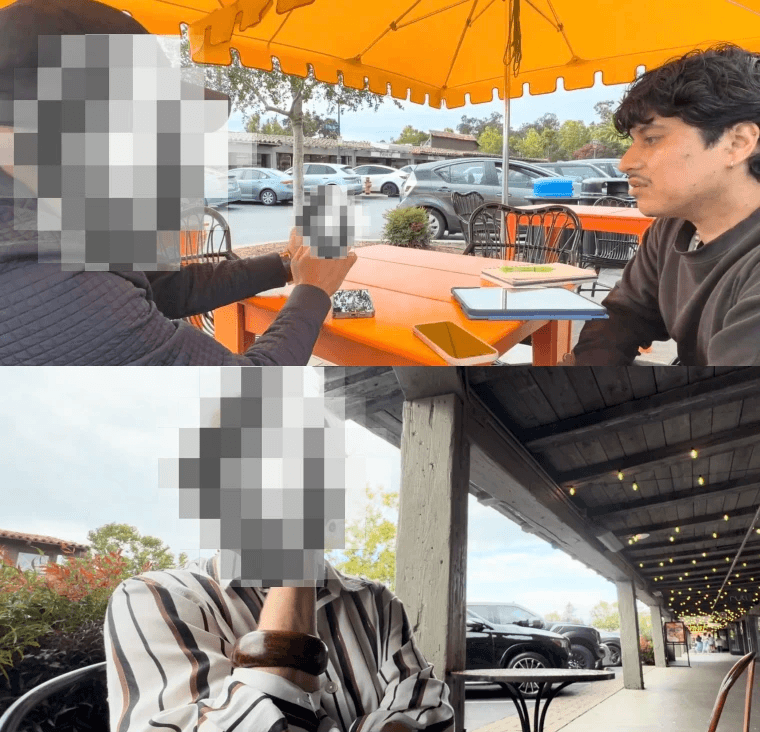
Three of our nine empathy maps + interview action shots
THE MARKET GAP
Existing tools show patterns retrospectively; none help you act proactively.
Daylio, Moodflow, Daily Bean:
"You felt sad Tuesday."
Descriptive insights that show patterns after the fact
KYro:
"Move your 1:1s earlier—afternoons drain you."
Prescriptive insights that help you act before burnout
We analyzed 4 mood tracking competitors and found they all focus on showing you emotional patterns after they've happened. None integrate with calendars. None suggest proactive schedule adjustments. That's the gap Kyro fills.
OUR SOLUTION
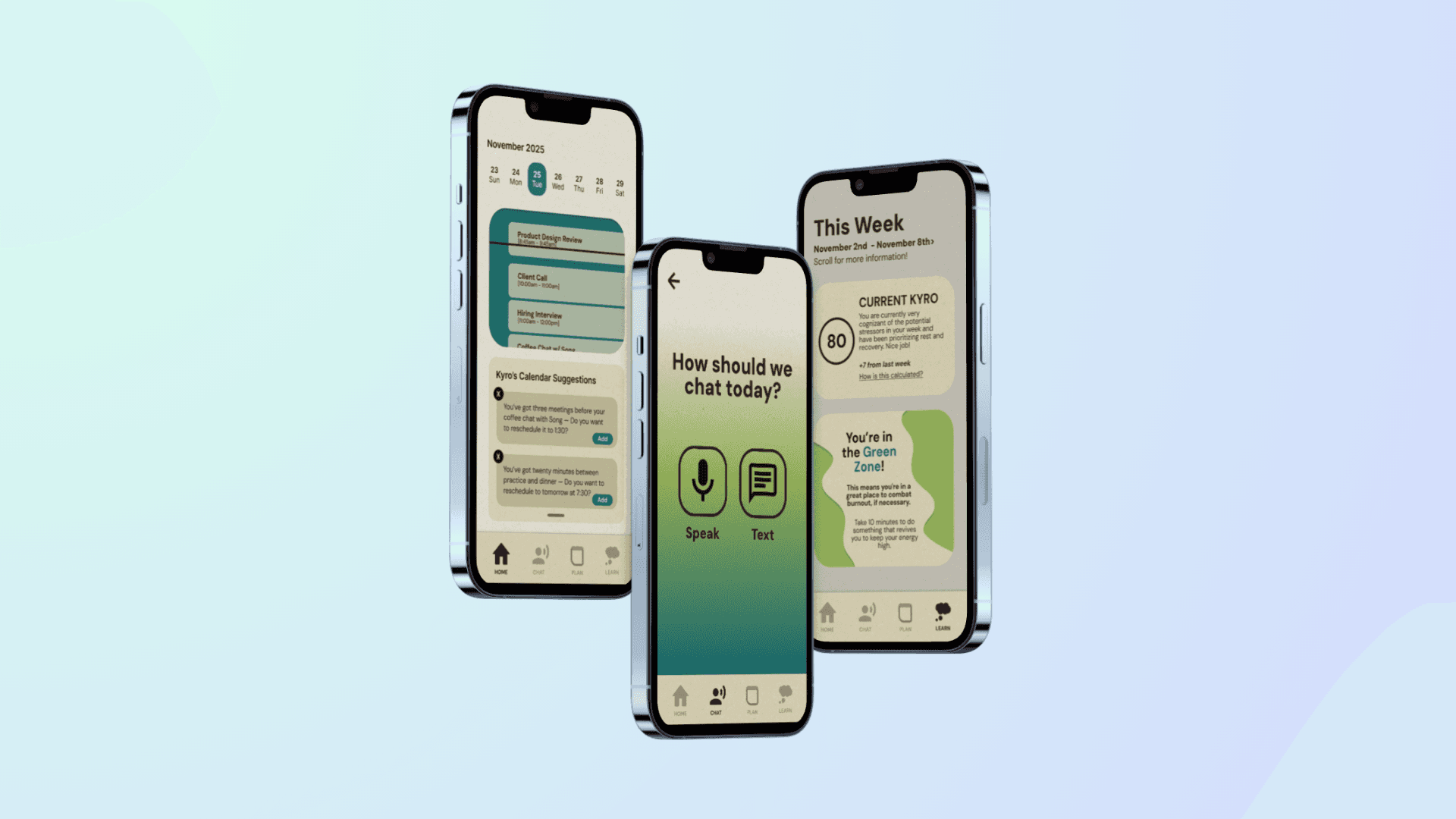
Voice AI + calendar integration + predictive insights

Voice or text check-ins. AI extracts emotional patterns without manual tagging.

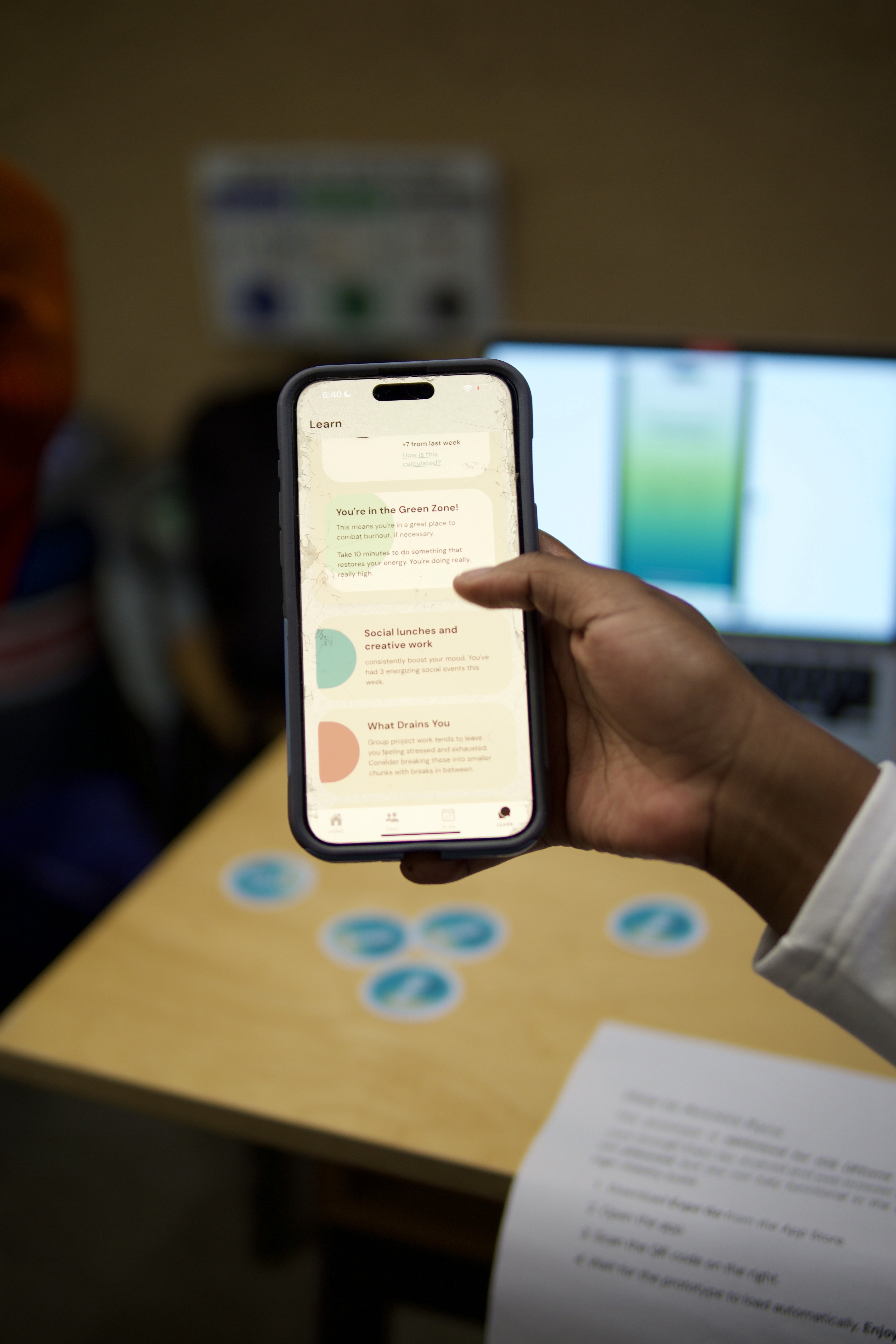
See which activities energize or drain you over time. Track your "Kyro Score."

Get smart calendar suggestions before burnout happens. Align energy with commitments.
We analyzed 4 mood tracking competitors and found they all focus on showing you emotional patterns after they've happened. None integrate with calendars. None suggest proactive schedule adjustments. That's the gap Kyro fills.
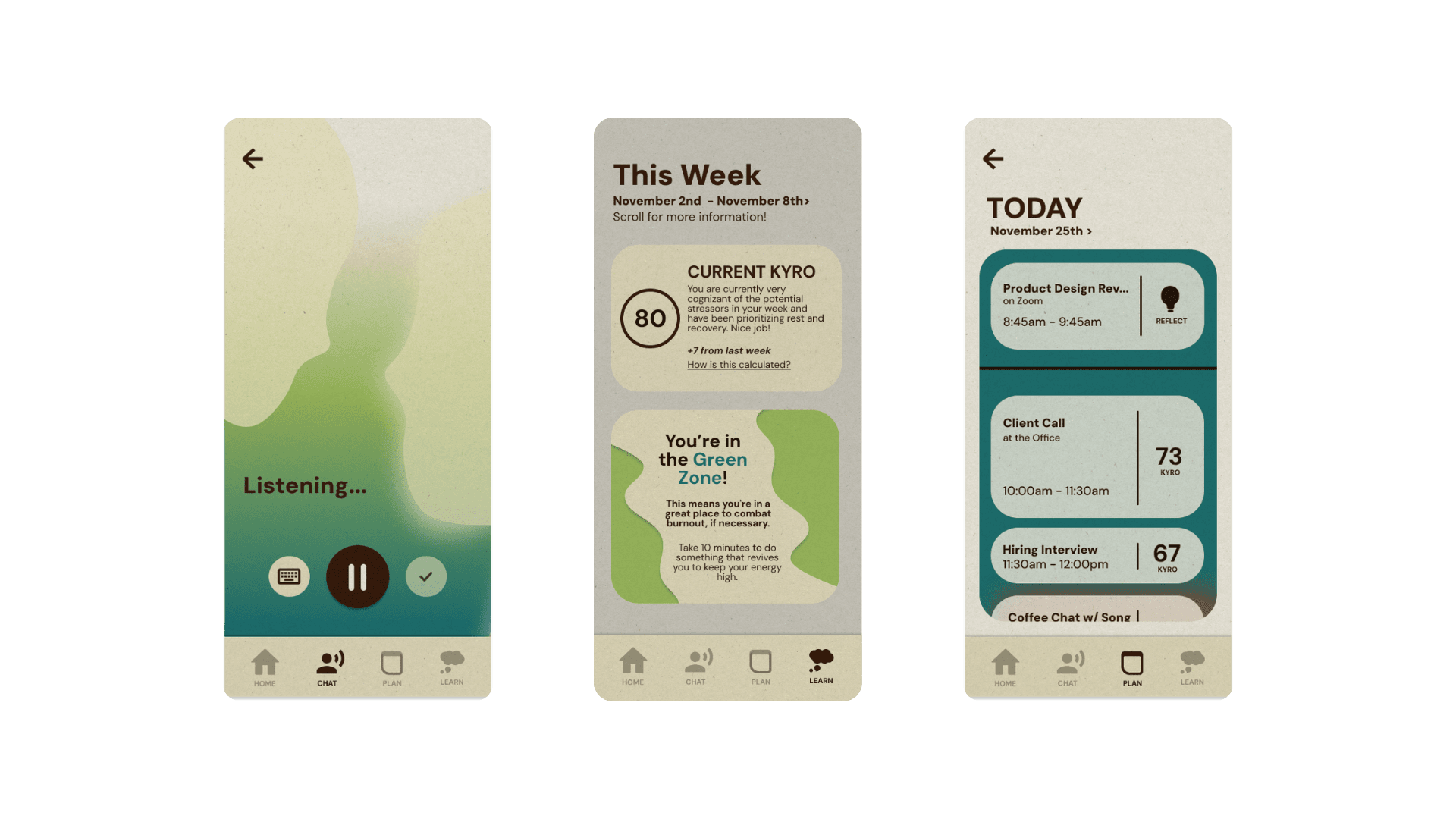
Kyro turns emotional awareness into part of planning. Users log their moods, tag events with energy levels, and receive insights like "time with these friends boosts your energy" or "back-to-back meetings before 1pm drain you." Over time, Kyro helps users schedule for balance.
content design
We removed all language + design indicators that project emotions onto users.
The Risk:
AI making assumptions about user emotions could feel invasive or inaccurate, breaking trust.
BEFORE EXAMPLES (PROJECTIVE)
"This event will be overwhelming."
"You're going to feel drained."
"This meeting is stressful for you."
AFTER EXAMPLES (CONTEXTUAL)
"In context, this event might be too overwhelming."
"Based on patterns, consider rescheduling."
"Similar meetings have drained your energy."
This change, moving from projective to contextual language, came from feedback warning us that AI can feel "too confident" about the user's emotions. Kyro suggests patterns and never assumes truth.
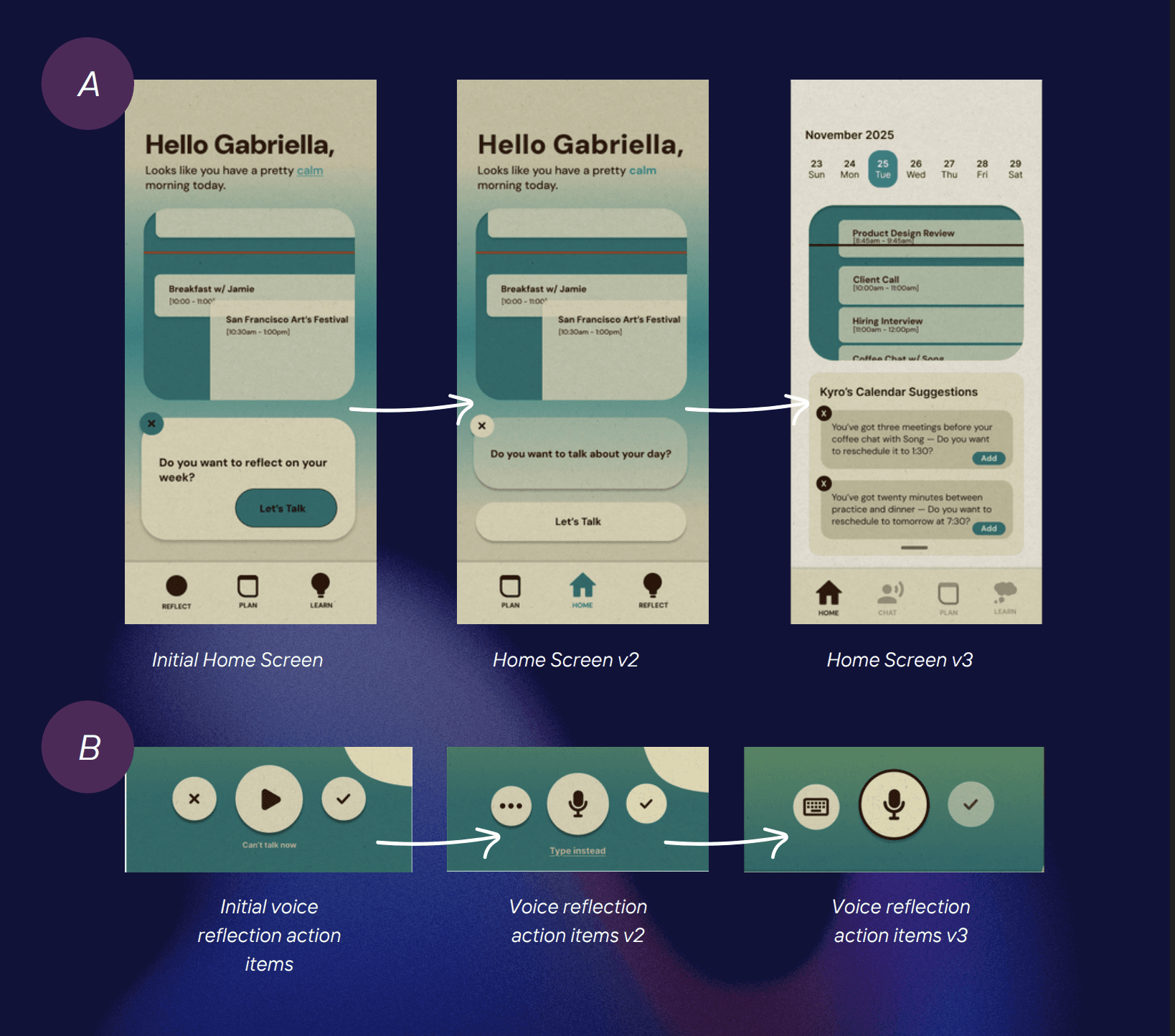
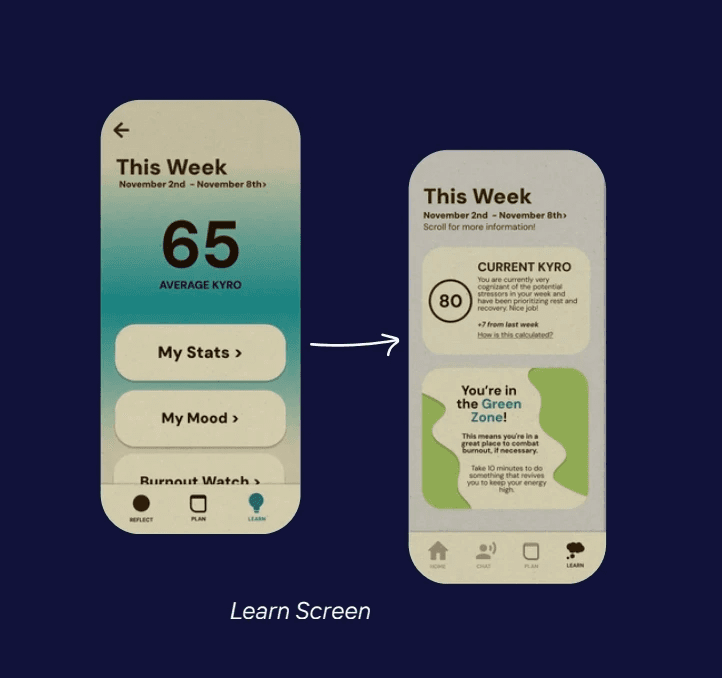
Examples of other design changes made
implementation
Built with React Native + Google Gemini API
We built a fully functional high-fidelity prototype using React Native and Expo. The AI integration uses Google's Gemini API with carefully constrained prompting:
No questions (AI doesn't interrogate users)
No advice (AI suggests, doesn't prescribe)
No assumptions (AI contextualizes, doesn't project)
This ensures the AI feels supportive rather than intrusive—a key tension we navigated throughout design.
branding
Creating our voice through branding
Wanting to play into the "energy as an orb" motif along with the earthy yet bold color palette of our app's design language, I wanted our logo and outward facing representation to evoke similar feelings of energetic comfort.
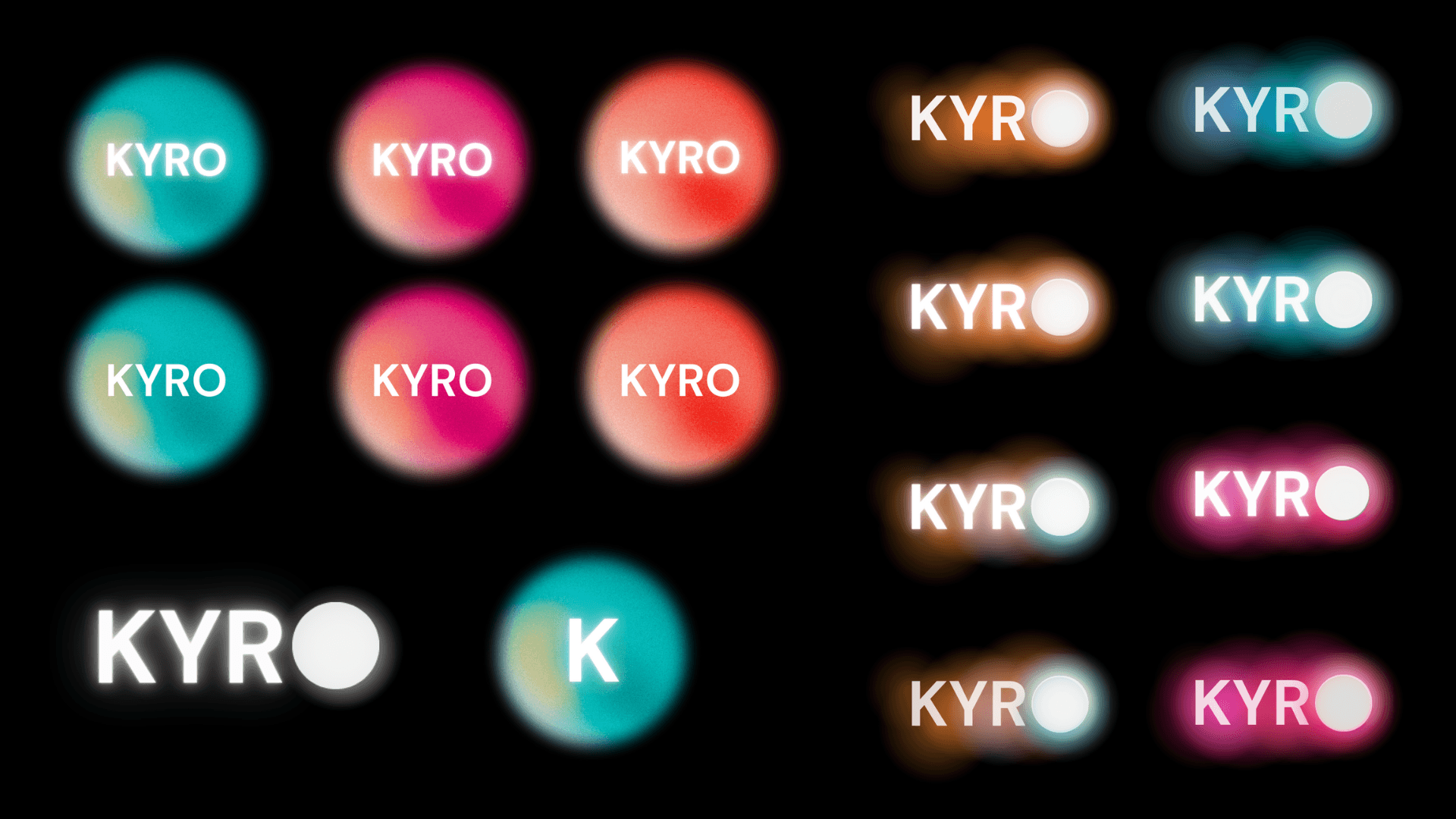
Kyro logo ideation
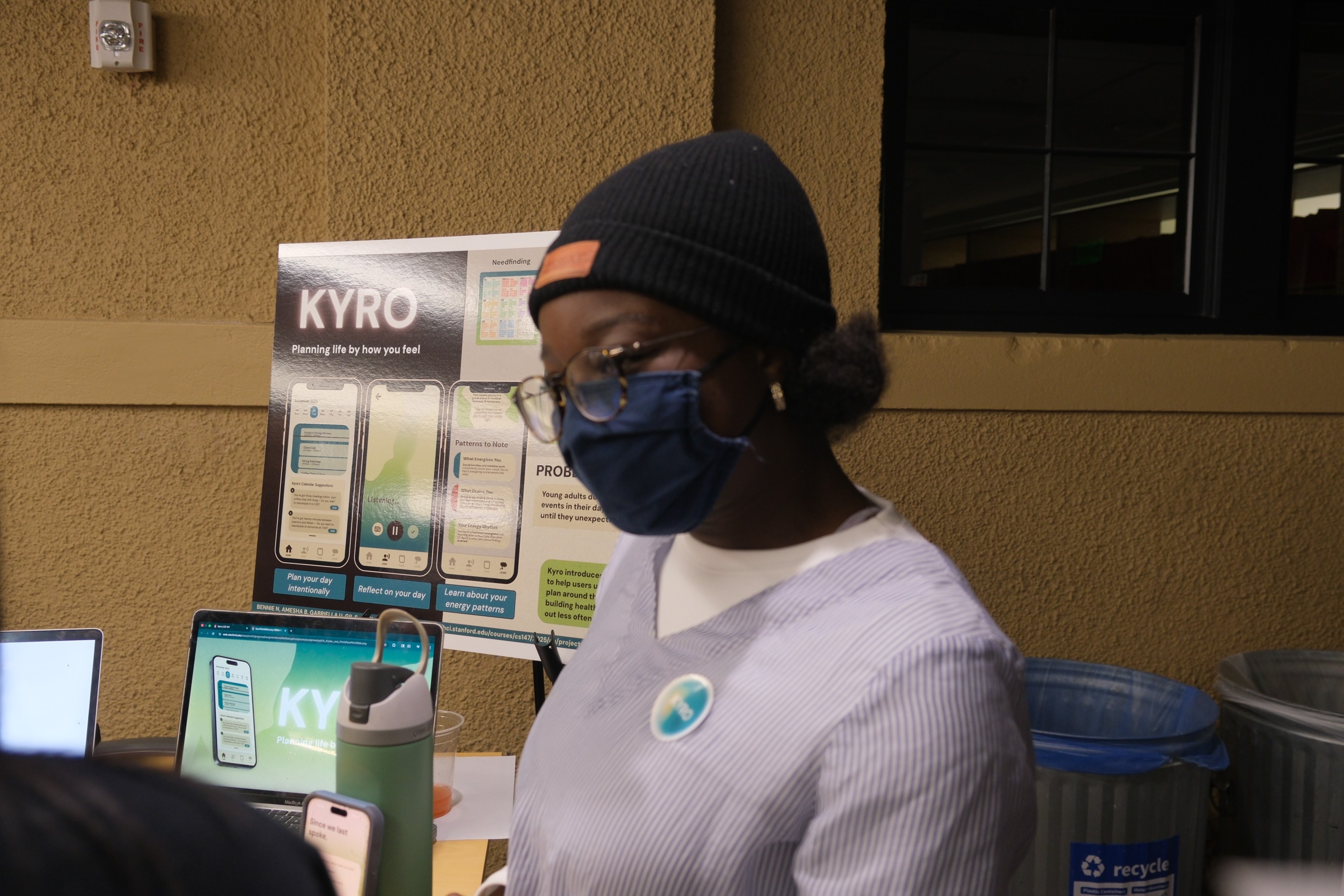
I used this same direction when creating our pitch slide and project poster.
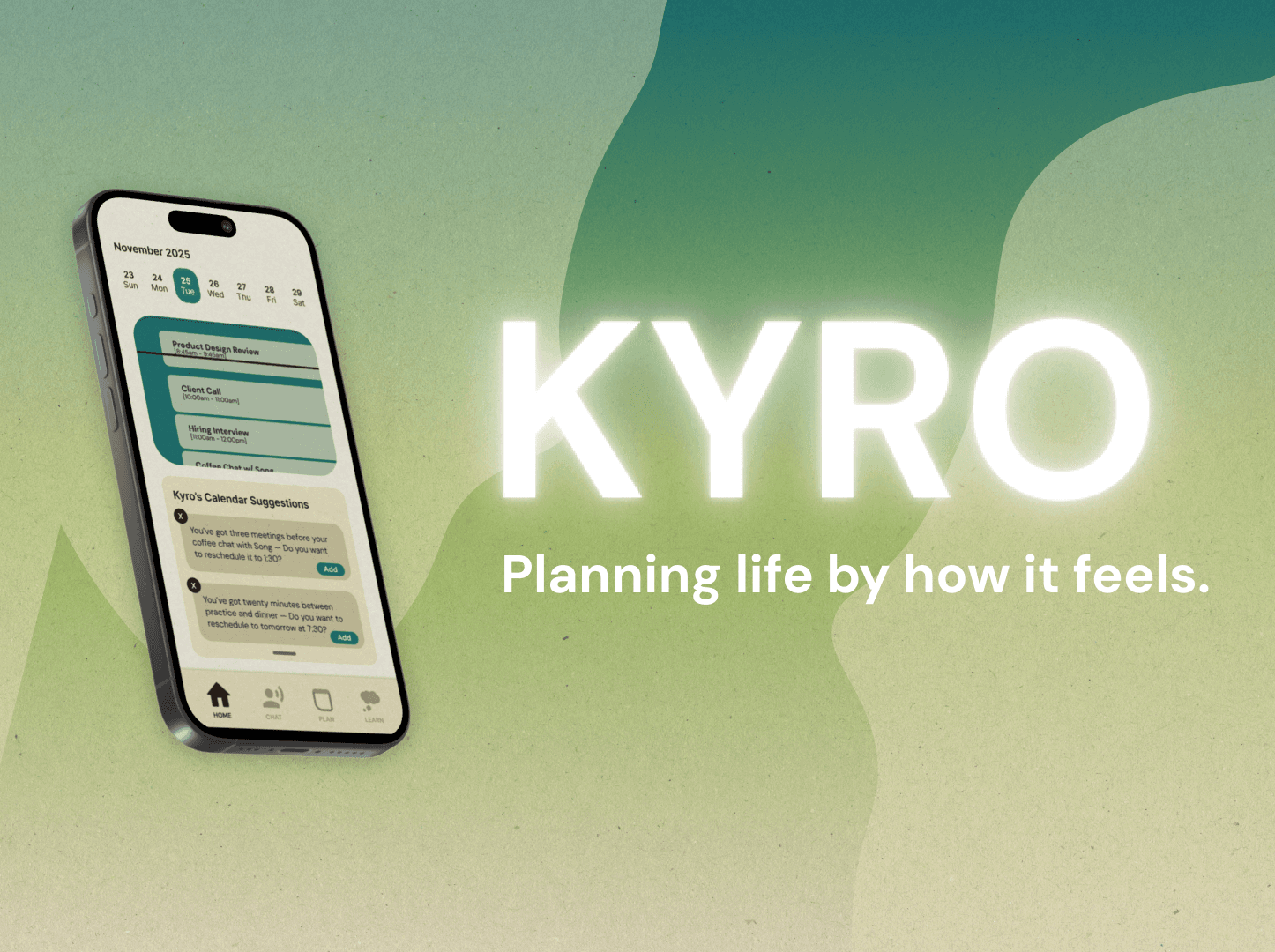
Kyro Pitch Slide
Final Logo

Kyro Project Poster
impact
Award-winning concept with ongoing development
6
Awards won
34
Heuristic violations addressed
3
Design iterations
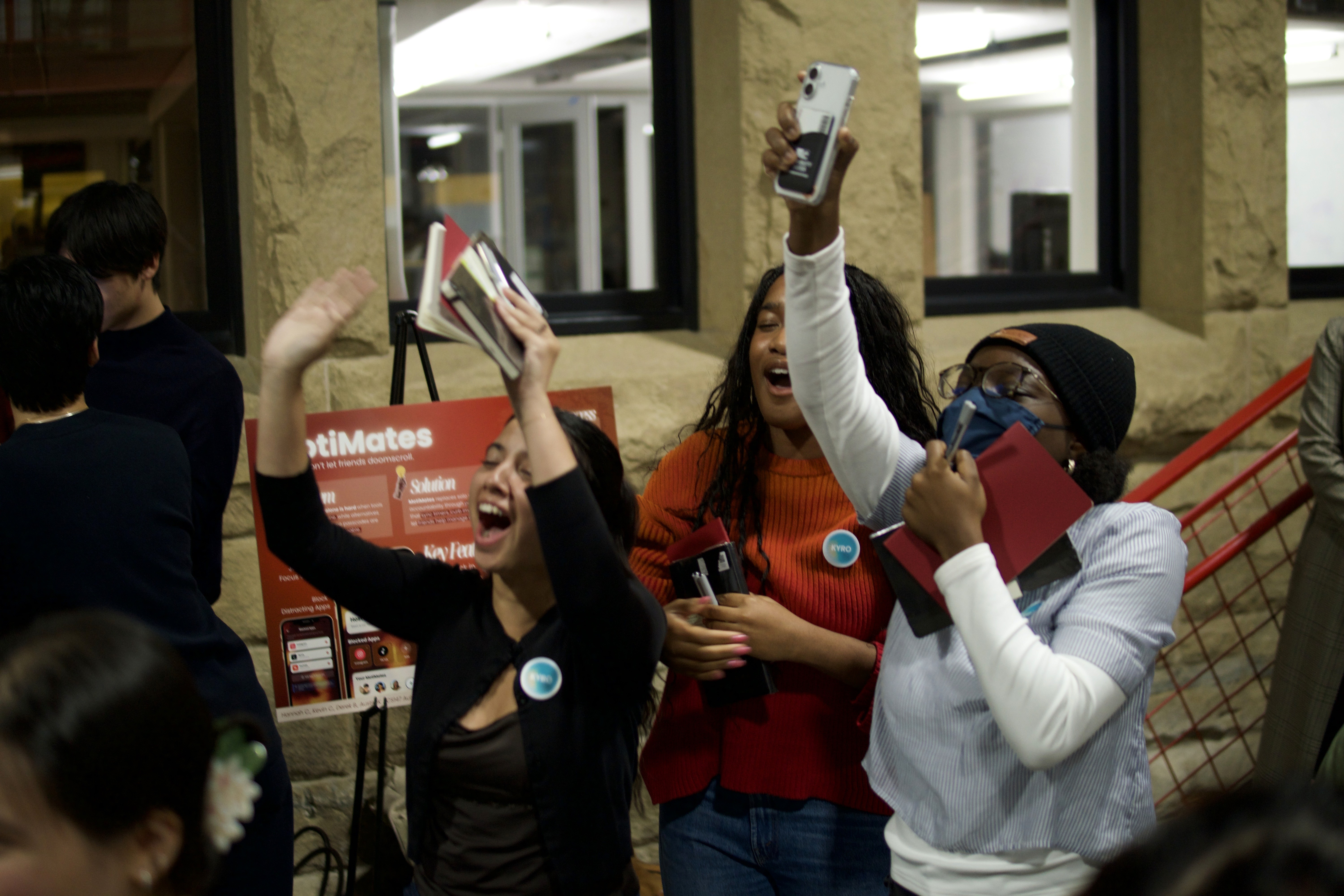
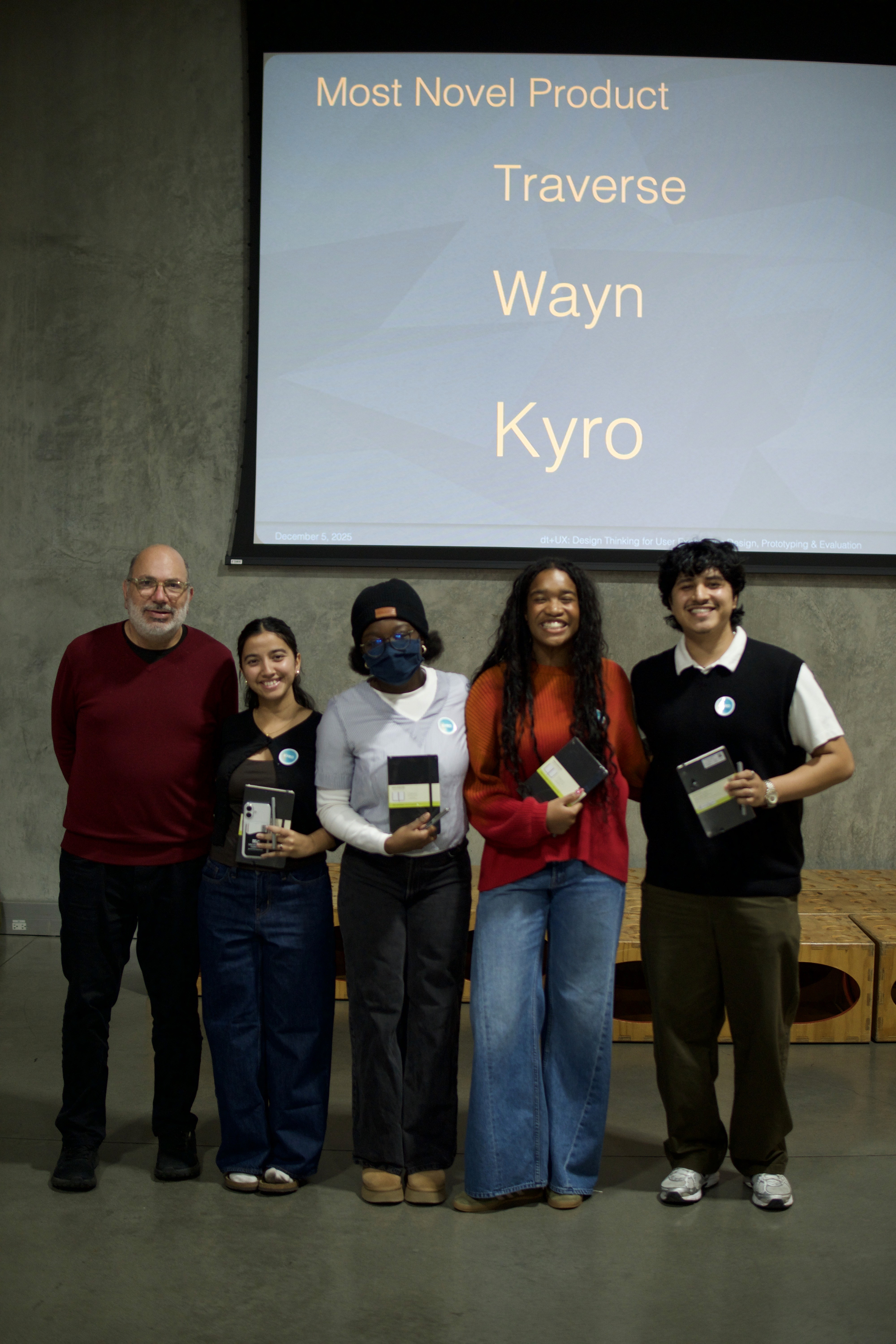
Awards and Honors won out of 23 projects:
Most Novel
Best Concept
Best Soundtrack (Concept Video)
Most Coherent Values (First Runner Up)
Staff Pick (Second Runner Up)
Top 6 Projects
What I learned: The hardest part was making AI feel trustworthy and personable, but not human. Every design decision came back to trust: How do we make suggestions without feeling invasive? How do we show patterns without projecting emotions? How do we create an environment for reflection without seeming like a therapeutic agent?
Additional info
Want to learn more?
I hope you enjoyed this sneak peek! Every detail of our 10-week journey is documented on this website; please click on the following to explore more:
Thank you so much to Amesha B, Gabriella U, and Gil S for being the best teammates ever! Additional thanks to Charlotte Z for your guidance and support throughout the process; without you, there is no Kyro <3